
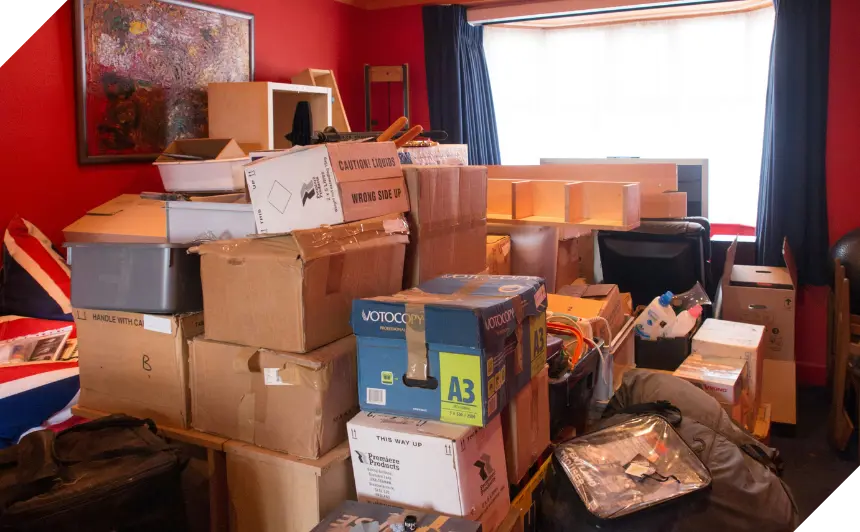
Hoarding is having so many things in your home that you cannot manage the clutter and find it difficult or impossible to throw things away.
Hoarding Disorder is a recognised mental health condition.You might hoard because you feel a strong need to keep things. The items can be of little or no monetary value. But your connection to these things can cause you distress. And the impact of hoarding can affect your day-to-day life.
If you, or someone you know or suspect, may be struggling with hoarding, please let us know, in confidence.
About hoarding and the help available
The International OCD Foundation has created a clutter rating scale.
This is displayed as a series of pictures of rooms in various stages of clutter – from completely clutter-free to very severely cluttered.
In general, clutter that reaches the level of picture #4, or higher, impinges enough on people’s lives that we would encourage them to get help for their hoarding problem.
The clutter can pose a health risk to the person and anyone who lives in or visits their house, but also their neighbours and local community. For example, it can:
- make cleaning very difficult, leading to unhygienic conditions and encourage rodent or insect infestations
- be an increased fire risk and block exits in the event of a fire
- cause trips and falls
- fall over or collapse on people, if kept in large piles
- effect day-to-day life, when rooms are not used for their intended purpose. For example:
- when a bathtub and/or sink is used for storage it’s impossible to bathe – leading to poor hygiene
- when a kitchen worktop is covered with things it’s impossible to prepare food – leading to poor nutrition
- when a bed is covered with clutter it’s hard to sleep – leading to sleep deprivation
- when windows can’t be reached, they can’t be opened – meaning no ventilation through the home which can lead to damp.
Also, often the person hoarding becomes reluctant to have visitors in their home, which can lead to:
- isolation and loneliness
- safety checks, servicing and repairs not being carried out if tradesmen are not allowed access.
Admitting that you need help is a big step.
There is lots of support available. We and other agencies are here to help, there will be no judgement.
If you think you can’t do it, take a look at this video about Keith and how he overcame his hoarding.
We can help. Let us know and your housing officer can visit you and help find a way forward.
Through your GP: if you’re not sure what to say, you can fill in this ice breaker document, to take with you.
Websites: there are several helpful websites with information and ideas on ways to help, including: